The Challenge
Many smallholder farmers in remote regions struggle with inconsistent network coverage, limited financial literacy, and historically cash-based cultures that are slow to adapt to new technologies.
Designing a platform that felt trustworthy, intuitive, and low-friction to this user base was not a simple task. Security was also a key concern, since farmers faced heightened vulnerability when adopting digital payments for the first time.
Mapping the Entire Farm Pass Ecosystem
Service Design & Journey Mapping
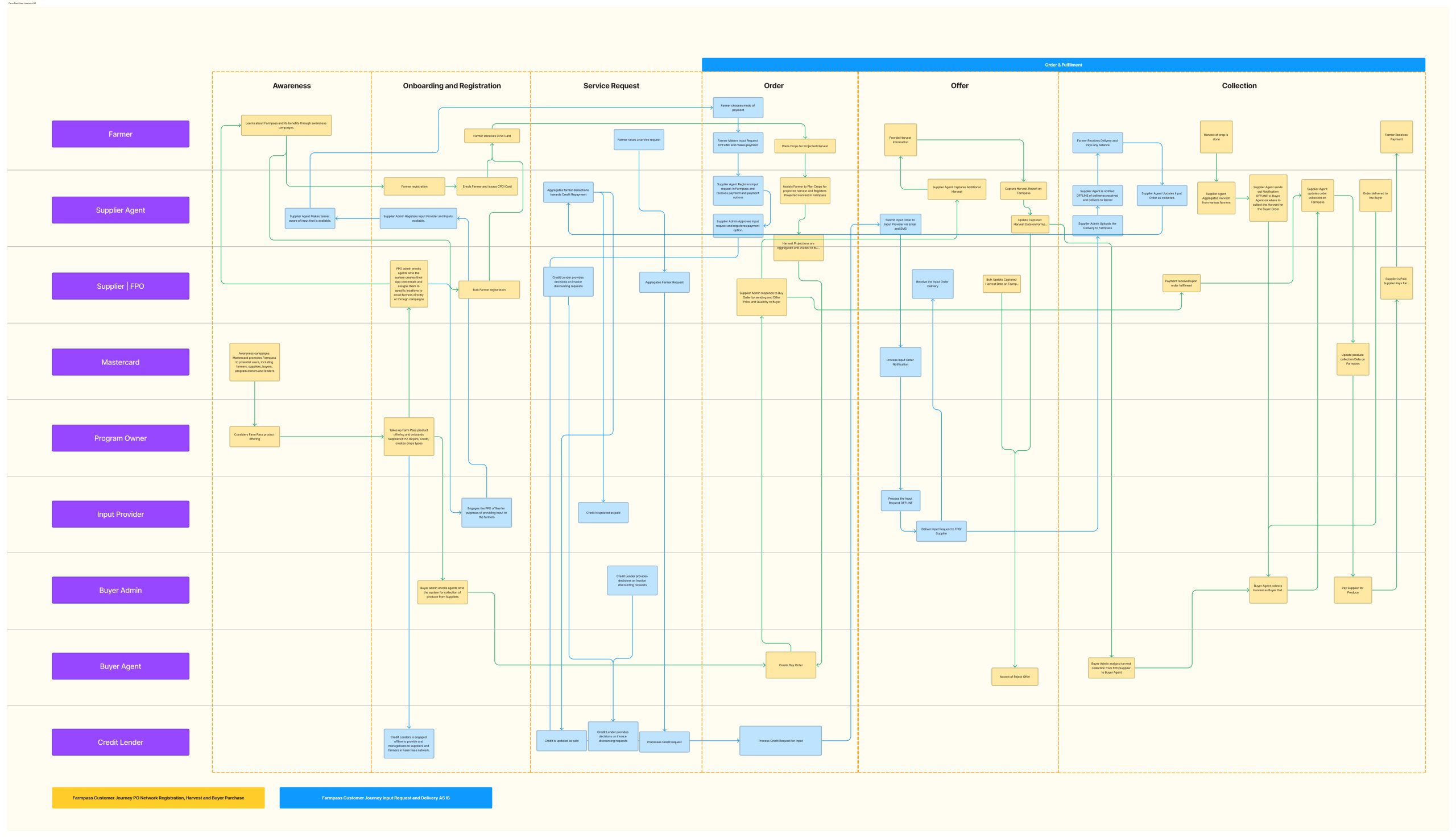
I developed an end-to-end service blueprint, identifying key user touchpoints, dependencies, and operational processes across multiple stakeholders, including:
- Farmers: The primary end users, requiring simple, trust-building digital transaction flows.
- Supplier Agents: Facilitating onboarding and ensuring smooth transitions to digital payment systems.
- Suppliers & Buyers: Engaging in the financial ecosystem through secure transactions and logistics coordination.
- Mastercard & Programme Owners: Overseeing the platform’s adoption, scaling, and security protocols.
This deep dive into service design allowed me to bridge gaps between frontstage (user-facing) and backstage (operational) processes, ensuring frictionless interactions. By visualising multi-user workflows (as seen in the attached user journey maps), I uncovered:
- Bottlenecks in registration and transaction verification.
- Opportunities to streamline financial flows between farmers and suppliers.
- Potential failure points where users needed additional guidance or offline support.
Impact of the Service Design Approach
By implementing insights from the journey mapping:
- Reduced onboarding friction: Introducing structured onboarding steps led to an estimated 25% faster registration time.
- Increased transaction confidence: Farmers were 30% more likely to complete transactions when we added offline status tracking.
- Improved operational efficiency: Simplified the role of supplier agents by reducing redundant verification steps, accelerating approval times by 40%.
- Clearer cross-user interactions: Enhanced farmer-to-buyer engagement by redesigning the offer-and-order workflow, reducing errors in product requests and collection logistics.
Iterative Design Process
We followed an iterative and user-focused process, refined through periodic testing:
Low-Fidelity Wireframes
- Created rough sketches and click-through prototypes in basic design tools.
- Tested them with representative users (including farmers with limited tech familiarity).
- Observed confusion around certain icons, prompting us to adjust the visual metaphors.
Mid-Fidelity Prototypes
-
Moved to more refined layouts with actual copy.
-
Conducted usability tests, measuring completion rates for tasks like account setup and first transaction.
-
Discovered the need for offline transaction indicators (showing partial confirmations if network coverage dropped mid-transaction).
High-Fidelity Designs
-
Incorporated Mastercard’s brand guidelines, ensuring consistent visual identity.
- Tested them with representative users (including farmers with limited tech familiarity).
- Observed confusion around certain icons, prompting us to adjust the visual metaphors.
Integrating Community Pass into Agriculture Commerce
In addition to user-centred design, I collaborated with the sales team to visualise how Mastercard’s Community Pass (CP) could integrate with existing agricultural finance and payment solutions. These journeys were tailored to demonstrate CP’s business potential, simplifying the registration, onboarding, and transaction workflows.
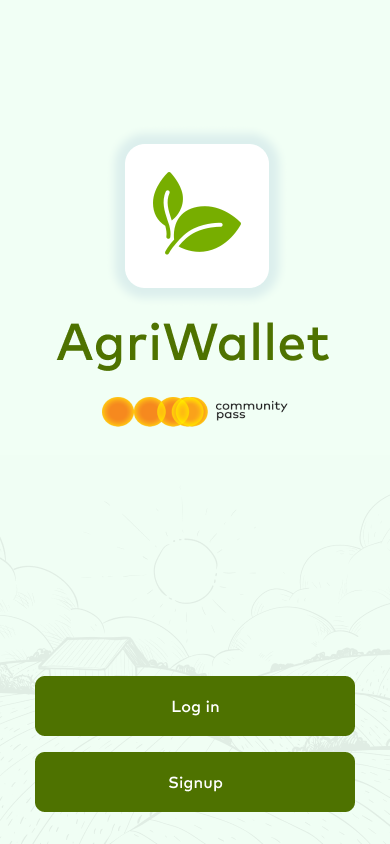
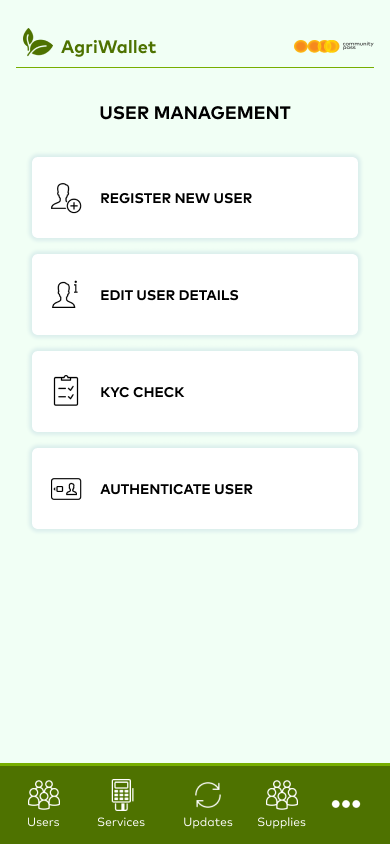
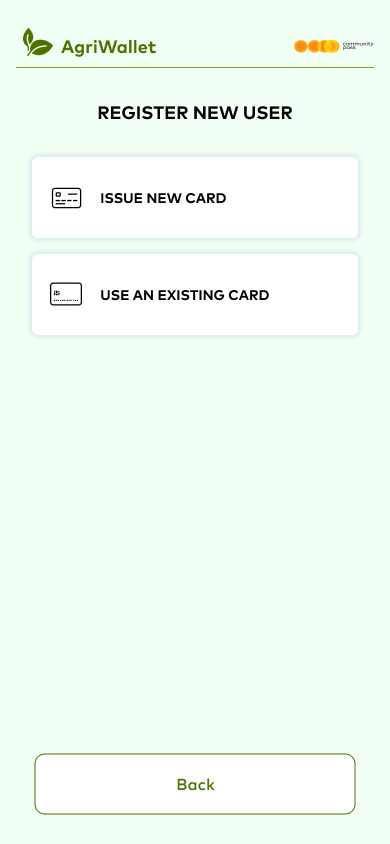
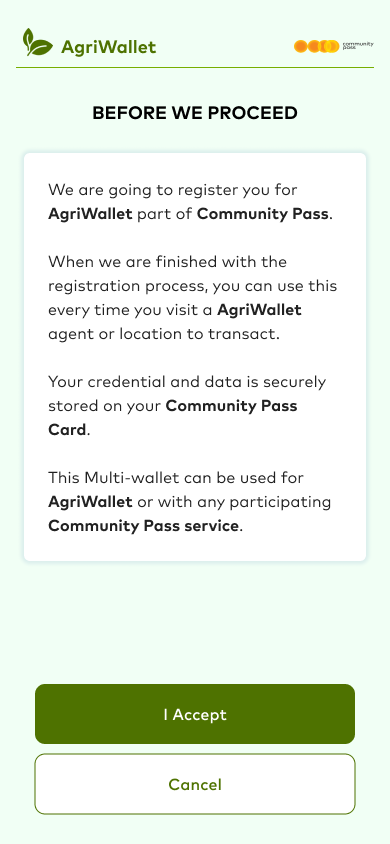
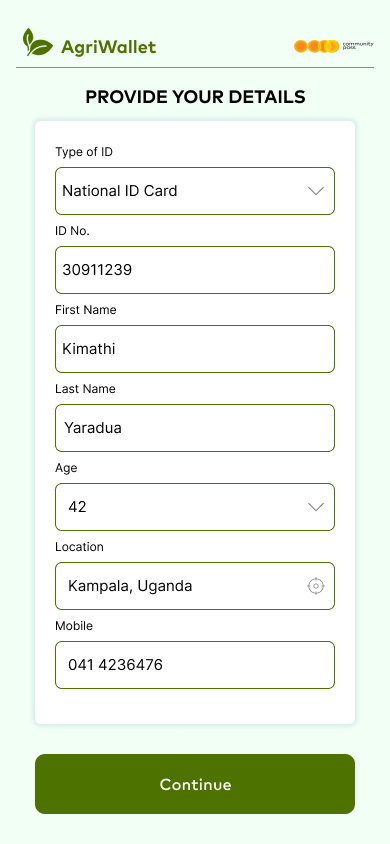
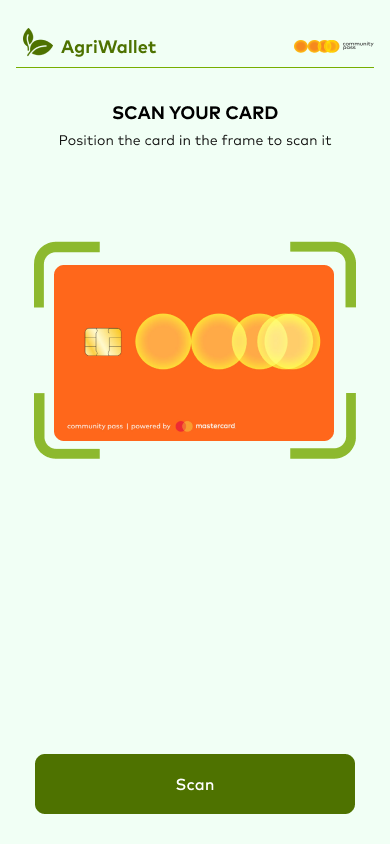
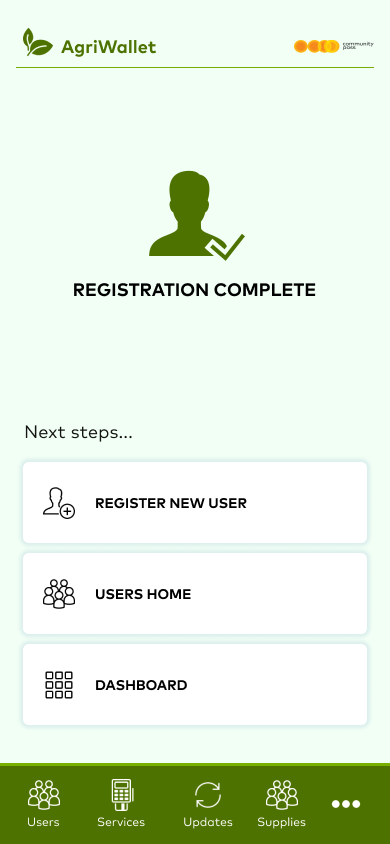
AgriWallet – Streamlining Co-Op Registrations
Objective:
To help Co-Op agents onboard new and existing farmers into the Community Pass ecosystem, ensuring a seamless transition from cash-based to digital transactions.



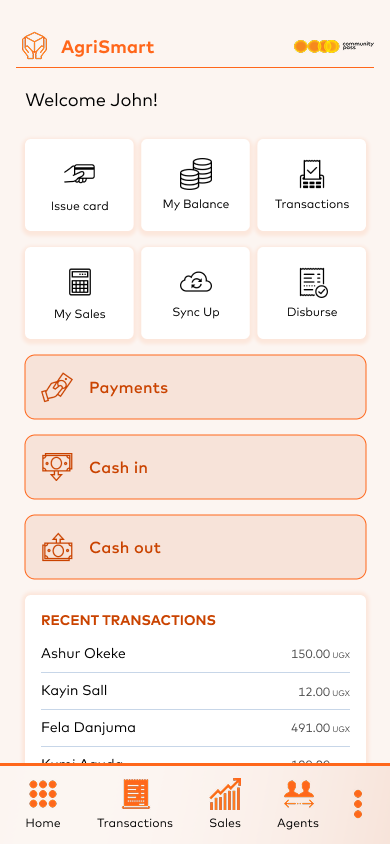
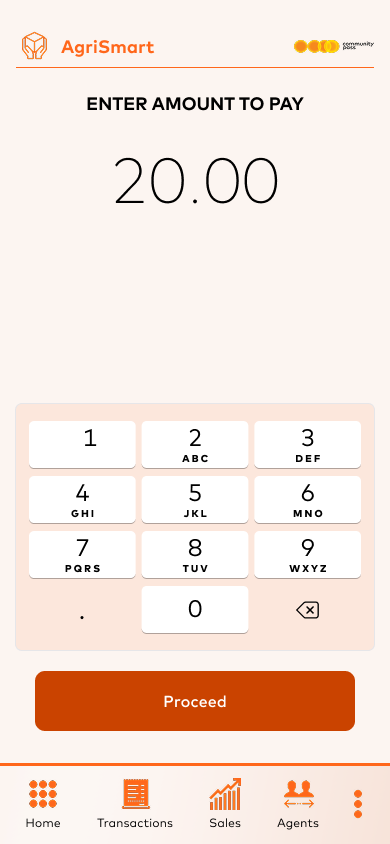
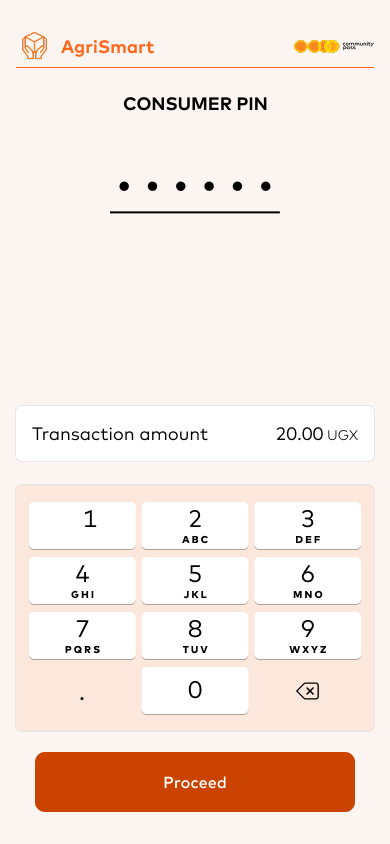
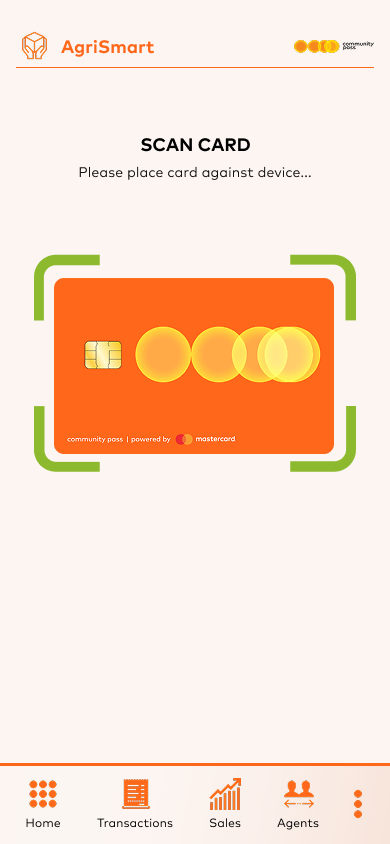
AgriSmart (CP Commerce) – Enabling Seamless Digital Payments
Objective:
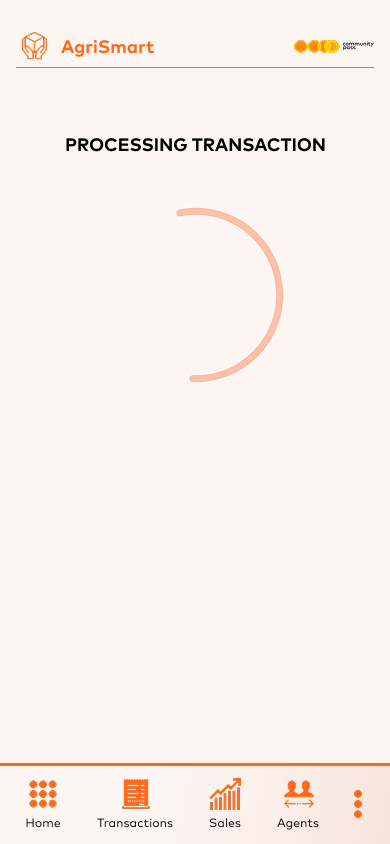
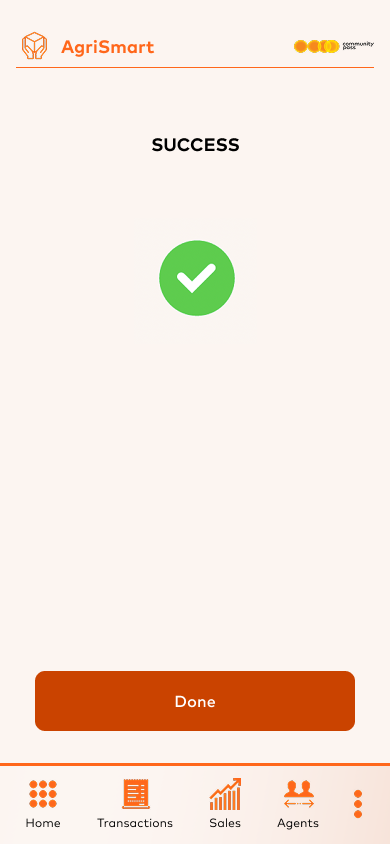
To demonstrate how merchants can receive payments from farmers, updating transactions directly on their Community Pass card.